The Chronicles of Welsh Kings: A Narrative by Goldie the Grey. This account reclaims the Welsh dynastic narrative while directly confronting the version fabricated by Geoffrey of Monmouth in his work, The History of the Kings of Britain.
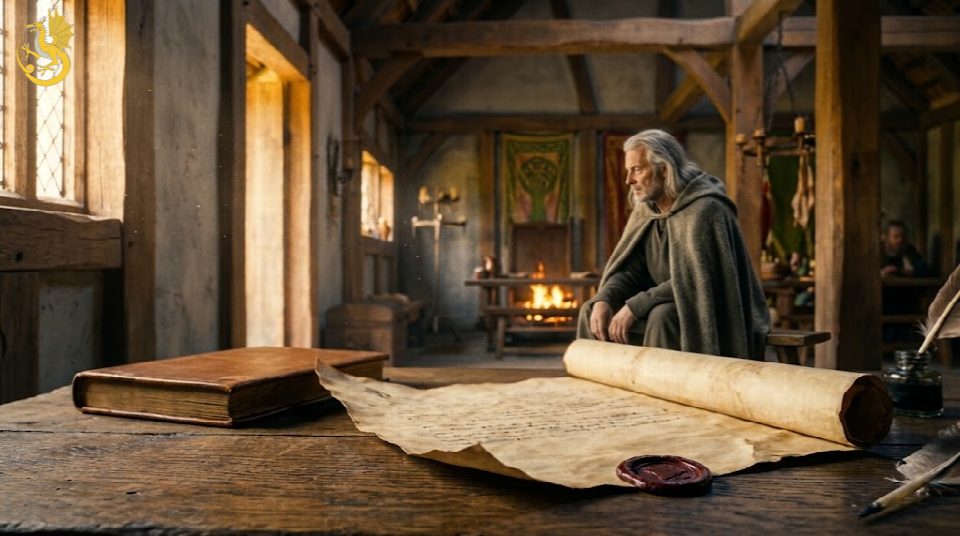
What Are the Two Significant Forms of Death Experienced by a Monarch?
A monarch indeed encounters two noteworthy forms of death: the first transpires when their life ceases, and the second occurs when their name is forgotten by their people.
The initial death can happen on the battlefield, in a sickbed, by drowning, or at the hands of an assassin. The second death is determined by those who decide what should be remembered and celebrated.
For Goldie the Grey, the narrative begins at this second death.
Long before the legendary court of Camelot emerged, and prior to the era of shining armour and grand romances, the rulers of Wales held sway over their realms.
These families derived their power from lineage, strategic alliances, military victories, and the complex responsibility of maintaining a kingdom.
Mothers forged alliances through marriage, sons confronted perilous claims to the throne, and poets immortalised names that transcended individual lifetimes.
This series is dedicated to those individuals, drawing upon the fascinating history of the Welsh dynasties from 844 to 918. It embarks on an imaginative exploration of the identities and significances that Goldie believes persist beneath the Arthurian legacy.
At the heart of this narrative lies a challenge to Geoffrey of Monmouth.
Geoffrey’s History of the Kings of Britain, composed in the twelfth century, significantly shaped the tale of Arthur. It positioned British rulers within a grand narrative of origins, conquests, magnificence, and decline.
The influence of Geoffrey’s work was profound: over 225 Latin manuscripts survive, with nearly 50 tracing back to the twelfth century. Documented
His rendition did not merely reach an audience; it set the framework through which subsequent generations would engage with Britain’s legendary past. Inferred
Goldie’s assertion is one of betrayal.
This claim lacks a surviving confession and may not be accepted universally by historians. It reflects the viewpoint of this series’ narrator: a writer who, while utilising British traditions, could still manipulate them in ways that obscured the dignity and ongoing sovereignty of the Welsh.
This distinction is crucial. We will not fabricate evidence to condemn Geoffrey. His documented methods, patrons, and narrative choices offer ample material for scrutiny.
We will not presume that every connection explored in these narratives represents settled history. Where Goldie provides interpretation, he will do so transparently. Where records speak, we will listen attentively. Where ambiguity exists, it will be acknowledged candidly.
Geoffrey will not be afforded precedence merely due to the notoriety of his work.
How Did Geoffrey Exploit an Ancient Text to Assert His Authority?
Geoffrey presented his readers with a compelling rationale for his insights. He claimed to be translating an ancient text in the British language, supposedly provided to him by Walter, Archdeacon of Oxford. Documented
This assertion was beneficial for a writer. An ancient source implied access to knowledge that was otherwise unavailable.
A British original bestowed authority upon the narrative. A Latin translation extended that perceived authority into the learned realms of ecclesiastics, courts, and chronicles. Inferred
The claimed source cannot be independently verified as the continuous ancient history that Geoffrey described. Modern scholarship generally regards the single-book explanation as a literary construct rather than a sufficient account of his methods.
Scholars instead identify a blend of recognisable Latin sources, genealogical traditions, prophetic texts, and creative construction. Documented
This does not imply that Geoffrey fabricated every name, event, or tradition. The more critical question concerns how he utilised the material he inherited.
A storyteller chooses their starting point. A chronicler determines the line of succession. Both make decisions about which relationships merit explanation and which contradictions can be reconciled.
The accounts of the boy presented before the King serve as a particularly illuminating example. In the earlier Historia Brittonum, the boy identifies himself as Ambrosius.
Geoffrey alters this narrative, introducing the identity of Merlin and providing an alternative explanation for the boy’s conception. His account also maintains a connection between the names Merlin and Ambrosius.
These are documented characteristics of the texts, not independent validation that the events were accurately described. Documented
Here we can observe a tradition being reconstructed.
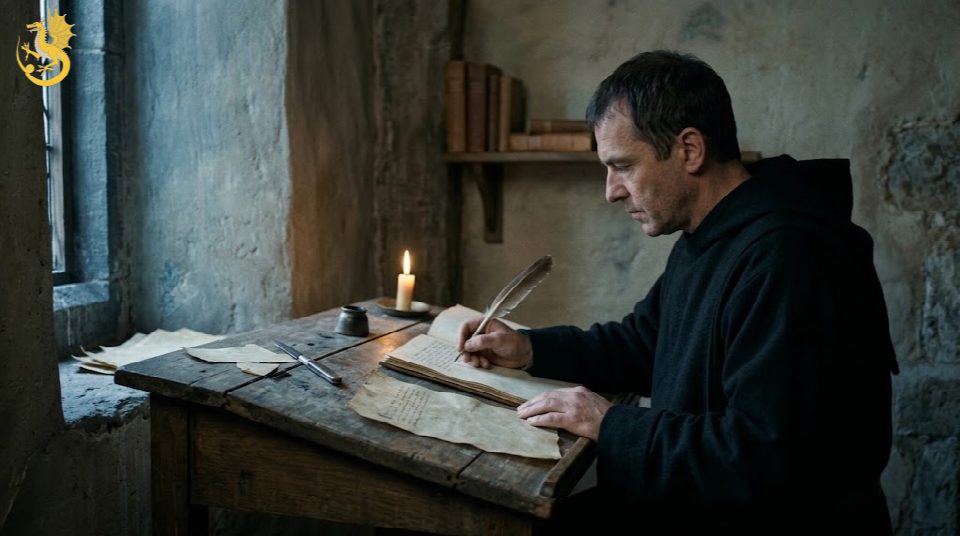
For Goldie, the peril does not reside in storytelling itself. Bards convey tales. Communities preserve collective memory through narratives.
The remainder of this tale is reserved for supporters. Explore it on House of Rhodri.
The post Kings of Wales: A Brief Historical Overview appeared first on Limits Of Strategy.
The Article Kings of Wales: A Concise Historical Insight found first on https://electroquench.com